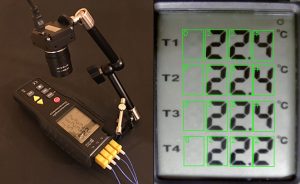
Some time ago I purchased 4 channel thermometer. Soon after tried few optical character recognition (OCR) techniques on 7 segment symbols including pytesseract, they worked but I was not happy with results. Few days ago pyimagesearch published article detailing his approach. So I pushed it a bit forward and made solution more robust. Also added […]
Read MoreMeasuring minimal and maximal microscope magnification and zoom ratio
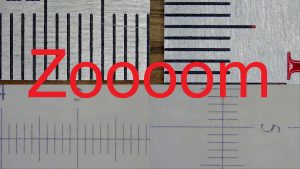
Magnification ratio is one of many parameters to describe optical instrument – microscope in this case. Magnification ratio usually comes along with zoom range. These terms are often being misused. In this post I will measure zoom range and magnification ratio of monocular video microscope lens and stereo inspection microscope (Konus #5424) head. Despite being […]
Read MoreUnusual tasks with images – stacking pictures
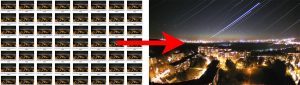
Stacking images always has been a favorite topic for astro or timelapse photographers. In most cases computational photography opens complete new dimension to taking pictures and acquiring awesome results. There are countless commercial software packages with some advantages or limitations. My mind about simple tasks has always been on DIY side – I think it […]
Read MoreAny CS-mount camera deserves autofocus!
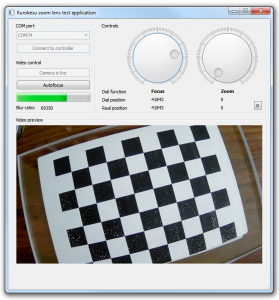
I have been working on open-sourced motorized zoom lens for a while. Probably there is no need to mention benefits of having motorized zoom/focus lens on a regular CS type camera. Even greater value comes by having auto-focus capability. This feature is being calculated on host computer and does not consume lot of resources. Many […]
Read MoreExploring and displaying USB video with GraphEdit
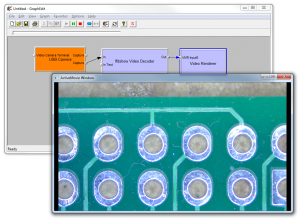
GraphEdit is a little known tool distributed with Microsoft Windows Software Development Kit (SDK) and allows exploring camera settings and video rendering filters. A copy of old version (which worked just fine without installing whole SDK) can be found wildly on the internet. Besides ability of tinkering with options it is much more advanced tool […]
Read MoreOpenCV USB camera widget in PyQT
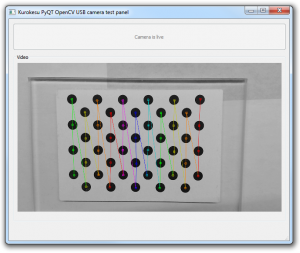
Both tools OpenCV and PyQT are incredibly useful. One in combination with Qt Designer gives rapid GUI building possibility. Another is used for visual image/video analysis. There was one drawback – very little documentation how to use them into one piece of code. All in the past now! To be short – sample program I […]
Read MoreOpenCV 3 Python blur detection
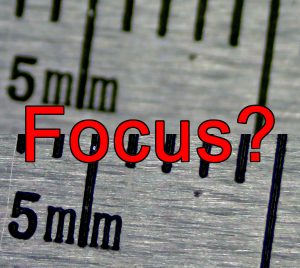
In order to detect if picture is in focus modern consumer cameras use complicated phase detection circuitry and specialized sensors. But how to determine if captured picture is in focus after it has been taken. Having this measurement information can help in many ways (select best picture in a sequence, control motorized lens, clean time-lapse […]
Read MoreAdvanced OpenCV 3 python hole detection
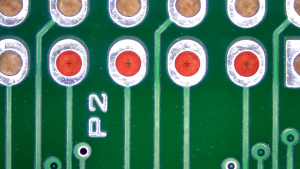
OpenCV is a well known computer vision library used as base framework used by major companies like Google, IBM, Sony and numerous others. It enables quick vision based tool development and results can be seen in a minutes after starting to code. This time I will show how to find round blobs (for example fiducial […]
Read MoreMaking animated GIF’s
There are countless ways of making animated GIF’s. Unfortunately many tools are crap-ware. You asked how I make my clips, here is python recipe which works flawlessly. Prepare It is obvious that Python should be installed. Then install moviepy by typing “pip install moviepy” and you are ready to go. Script
Read MoreManual USB camera settings in Linux
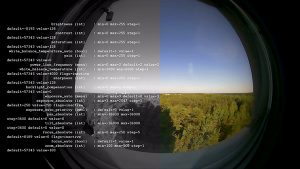
More comprehensive updates and knowledge base is maintained HERE There are many UVC compatible webcams most of them support full auto mode but only a few of these cameras provide extended manual white balance, gain and exposure control. Kurokesu C1 family (C1, C1 PRO, C1 MICRO), Logitech C920 and Brio are the ones […]
Read More